For many non-profit organizations, creating and sharing valuable content is crucial for advancing their mission. But with limited resources, managing content creation and distribution can often feel overwhelming. The key to simplifying this process lies in structured communication, content, and editorial planning. By building a clear plan, non-profits can streamline their content strategy, ensuring that all efforts align with their mission and audience needs.
In this guide, we will walk through essential strategies for non-profits to streamline their content creation processes through communication planning, content planning, and editorial planning.
Create a Clear Communication Strategy
Before diving into content creation, it’s essential to build a foundation with a strong communication strategy. Effective communication planning ensures that your messages resonate with the right audiences, at the right time, using the right channels.
Key steps for developing a communication strategy:
- Define your communication goals and objectives: Start by understanding what you hope to achieve with your content. Is it increasing donations? Raising awareness? Engaging volunteers? Clearly define your objectives so your communication efforts remain focused.
- Identify your audience persona: It’s important to know who you’re communicating with. Create audience personas to understand the motivations, needs, and preferences of your target groups. The more specific you can be about your audience, the more impactful your content will be.
- Know the audience you want to communicate with: this is the cornerstone of effective non-profit communications. All too often when I talk to non-profits about who their target audience is, I’ll get answers like “donors” or “the local community.” These descriptors are way too broad and won’t serve you well as you try to make decisions about communications goals, tactics, and content. The antidote to having a broadly defined audience is to identify your target audience and to get to know them through on-going research.
- Here are some effective tips for sharing non-profit stories on social media: Social media is a tremendously fun and engaging way to build relationships with your community members. It is also a cost effective way to distribute content, such as stories, for your community to engage with.
Develop a Content Plan
Once your communication strategy is set, the next step is creating a detailed content plan. A content plan helps you structure your messaging and ensures that your content aligns with your overall
Key components of an effective content plan:
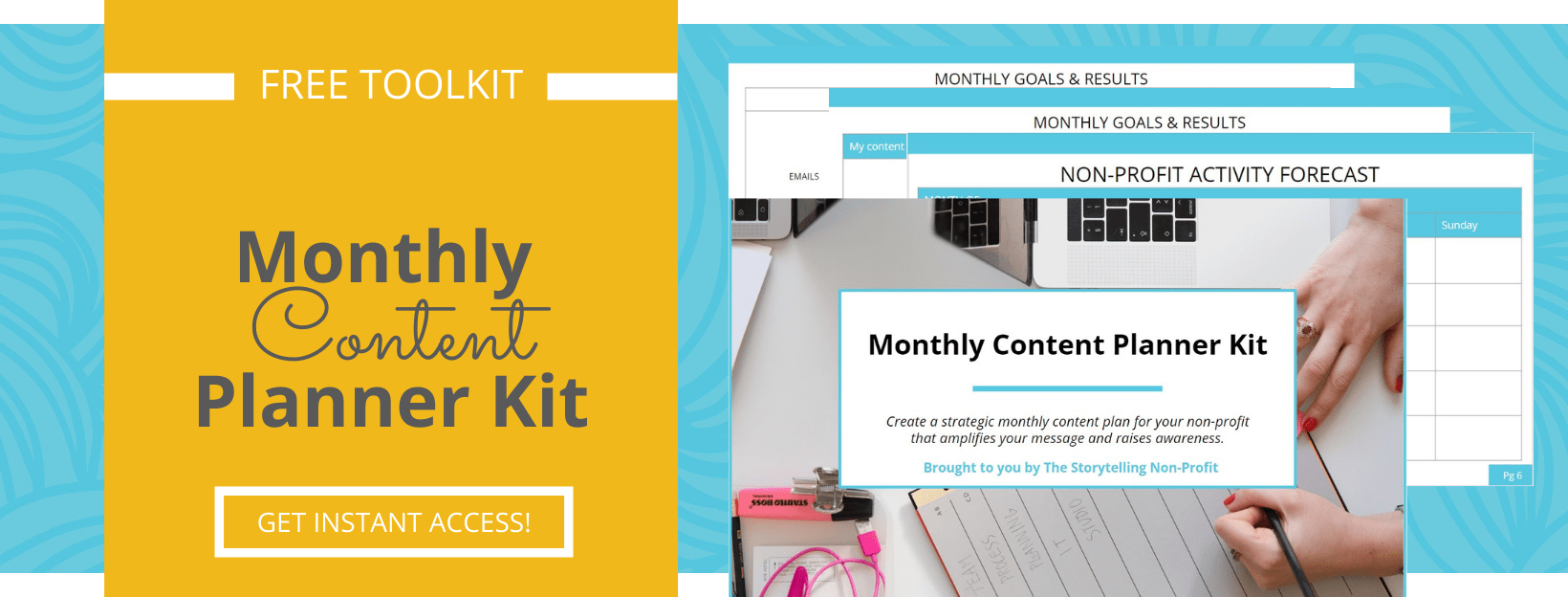
- Plan your non-profit’s content calendar stories: Develop a content calendar to schedule your posts, blogs, social media updates, and more. Planning ahead allows for more time to create quality content and ensures you won’t miss important dates.
- Produce quality content: To expand your organization’s audience and generate leads, you need to produce valuable content consistently. Take note of these processes you should put in place in order to publish quality content on a regular basis.
- Plan your content types: Diversify your content offerings to keep your audience engaged. Include blogs, newsletters, case studies, infographics, videos, and testimonials. Make sure each piece of content aligns with your goals and provides value to your audience.
- Create a content bank for your non-profit: Develop a content bank where you can store pre-created content, ideas, and resources for easy access. This reduces the pressure of constantly coming up with new ideas and allows you to reuse content strategically.
Editorial Planning for Smooth Execution
Now that you have your communication and content strategies in place, the final piece is editorial planning. This step ensures smooth execution and consistent output of content. Editorial planning involves managing the actual creation, review, and publishing of content.
Key aspects of editorial planning:
- Develop your editorial calendar for easy planning: A story editorial calendar allows you to collect, get approved, and ready to be published by when your campaign will be launched.
- Assign roles and responsibilities: Clearly define who is responsible for creating, editing, and approving content. If your team is small, consider using project management tools to streamline this process.
- Conduct regular content audits: Evaluate what’s working and what isn’t. This can help you eliminate outdated content, rework underperforming posts, and identify gaps in your content strategy.
Implement Audience Research
Effective content is driven by a deep understanding of your audience. One way to gain this understanding is by conducting thorough audience research. Regular audience research ensures that your content continues to meet the needs and preferences of your target groups.
Key steps for conducting audience research:
- Collect feedback directly from your audience: Surveys and polls provide fundraisers and communicators with valuable data points and insights about the people they want to communicate with. Ask them about their interests, challenges, and the types of content they find most valuable.
- Know the audience you want to communicate with: Review your existing content’s performance data. What types of posts get the most engagement? Use this information to refine your strategy and create content that better resonates with your audience.
Stay Organized with Project Management
- Plan your content strategy: Staying organized is critical to ensure all aspects of your content plan come together seamlessly.
- Project management tools like Trello, Asana, or Monday.com can help you assign tasks, track deadlines, and communicate effectively with your team. These tools help reduce the stress of managing multiple pieces of content while ensuring everyone stays on the same page.
- Trello for NP Comms is a toolkit of 9 pre-made Trello boards, tutorials, and time management strategies that will help you get organized and actually achieve your communications goals.
Streamlining content creation for your non-profit doesn’t have to be a daunting task. By focusing on effective communication strategy, well-organized content planning, and thorough editorial planning, you can ensure your content is both impactful and manageable. Don’t forget to conduct audience research regularly and stay organized with project management tools. By applying these strategies, your non-profit can create more compelling content that drives engagement, supports your mission, and ultimately makes a bigger impact in the community and your organization.
Happy planning!