
Effective donor communication is crucial for successful fundraising efforts. The relationship between a non-profit organization and its donors is built on trust, transparency, and ongoing engagement, all of which are nurtured through strategic communication. How an organization communicates with its donors can significantly influence donor retention, donation frequency, and the overall success of fundraising campaigns.
By understanding and implementing best practices in donor communications, non-profits can foster deeper connections with their supporters, inspire greater generosity, and ultimately achieve their mission more effectively.
Keep reading to explore the various ways in which donor communications impact fundraising results, the 3 donor communications you need to send, and the importance of personalized messaging.
How Donor Communications Impact Fundraising Results
The impact donor communications have on fundraising results largely comes down to improving donor retention, increasing donor lifetime value, and decreasing acquisition costs.
There’s not a lot non-profits can do to win back a lapsed donor whose financial situation has changed. But for so many of the reasons cited, there is an element in our control and that is communications.
As cited in Adrian Sargeant and Elaine Jay’s book Building Donor Loyalty four of the top ten reasons for donors lapsing relate to the quality of communication donors receive.
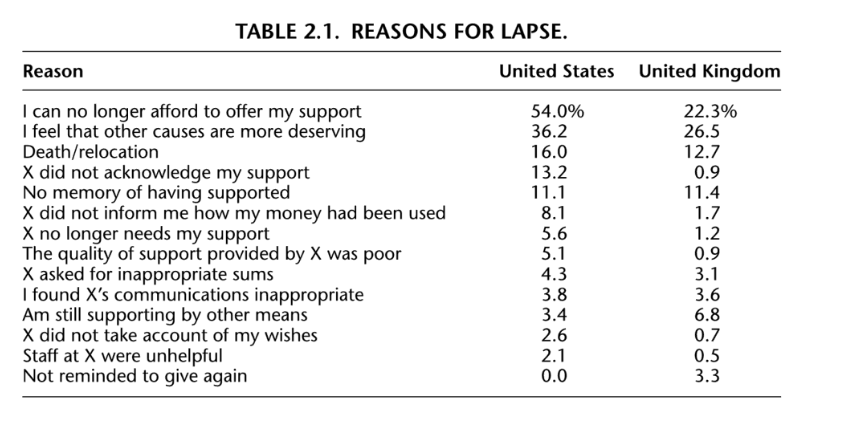
Sergeant and Jay characterize these reasons for lapsing as “poor quality of service from the organization” that donors support. The authors are quick to point out in Chapter 2 of the book that there’s also a discrepancy between donors’ perception of service and their expectation of service. This is a place where donor surveys can help an organization parse out what the expectations are.
And then of course, there’s the matter of stated preference (eg the donor wants to receive less email communication) versus behavior (eg the reality is that the donor is highly engaged with email and opens and clicks frequently), but that’s another matter to tackle within our fundraising programs.
3 Donor Communications to Send Now
Leading into year-end fundraising, we have about 2.5 months between Labor Day and Giving Tuesday to communicate with donors. This is prime time to send communications that accomplish two things:
- Communications that thank the donor for their past support
- Communications that show donors the impact of their past support
By sending communications that accomplish these two points, we effectively close the gift cycle with donors and set ourselves up for the next ask.
Here are three donor communications to consider sending during this time.
1. A gratitude report from the first half of the year
The mid-way point of the calendar year is an excellent time to pause and reflect on your organization’s accomplishments, and let donors know how they were a part of that.
This does not have to be a highly produced 10-page glossy printed report. This could be a thoughtful email or even a postcard. Ann Green has some helpful tips on postcard mailings here.
2. A thoughtful impact story
Sometimes telling one story is a lighter lift than trying to produce something like a gratitude report. Ideally, your organization will source an impact story that showcases how the work donors have support is making a difference.
3. Stories that strengthen your need for support
One of the reasons cited for lapsing in Sergeant and Jay’s research is “I feel other causes are more deserving.” What causes are “deserving” is highly subjective and yet it’s something our donor communications should be addressing regularly. One way we can do this is by telling stories that strengthen your need for support and show the need in the community.
It might seem like you’re setting yourself up for an ask (or should include an ask) in this communication, however, the focus of the communication here is education. We want to ensure that donors are informed about the need.
Variety BC wanted to launch a new program – funding private autism assessments for children. However, most of their donors didn’t know a lot about getting diagnosed with autism, let alone autism assessments.
In an effort to increase donors’ knowledge, we developed a series of stewardship stories that highlighted this program and underscored the need for this program in BC.
5 Essential Tips for Crafting a Stellar Donor Communication Plan
Creating a strategic Donor Communication Plan is essential for building long-lasting and loyal relationships with your contributors and supporters of your cause. To ensure your plan is effective, involve donors by seeking their opinions, and set specific metrics to evaluate your campaign’s success.
Here are 5 tips to create a stellar Donor Communication Plan, with examples for each:
- Post-Gift Follow Up – After receiving a donation, send a personalized thank-you email within 24 hours. Include details about how the donation will be used and share a story or testimonial that highlights the impact of their contribution. Follow up a few weeks later with an update on the project their donation supported.
- Seasonal Communication – Send a holiday greeting card with a heartfelt message of gratitude and a brief update on the year’s accomplishments. During major fundraising seasons, such as year-end Giving Tuesday, provide donors with compelling reasons to give, including matching gift opportunities or impact stories.
- Meaningful Content – Create and share content that resonates with your donors, such as success stories, behind-the-scenes looks at your organization’s work, or interviews with beneficiaries.
- Be Mindful of The Narrative You’re Crafting – Craft a consistent and compelling narrative that ties all your communications together. For instance, if your organization focuses on education, highlight different aspects of your work—like scholarship programs, school building projects, and student success stories—in a cohesive manner that reinforces your mission and impact.
- Mediums that Work for Your Organization and Your Donors – Use a variety of communication channels that suit both your organization and your donors. For younger donors, social media and email may be most effective, while older donors might prefer direct mail or phone calls. Tailor your approach based on donor preferences, which you can gather through surveys or past engagement data.
By incorporating these tips into your Donor Communication Plan, you can create a strategy that not only keeps your donors informed and engaged but also fosters a deep and lasting connection with your cause.
If your non-profit wants to share more compelling stories with donors but doesn’t have the bandwidth for finding, collecting, and developing stories, consider working with me through my Story Strategy + Writing package.